Thoughts about Game design and Interaction design
|Chapters, Game experience
Introduction
The chapter Design for Exploration: Room Escape Games below is written by me in 2016 after I completed the course “Fundamentals of Human Computer Interaction”. I tried to analyze the relationship between game design and human computer interaction rules and some interesting findings have been included. This chapter was selected and published in the small book HCI, Universal which was edited by Dr. Emilee J. Rader.


Have you ever heard or played a Room Escape Game? The best room-escape themed application I have ever played is called Missed Paradise, created by a Taiwanese. This story was happened at the end of the Second World War. Edward and Silvia were living in peaceful countryside with their children. Another day when they woke up in the morning, they found that they had been trapped in their house by a mysterious force. However they tried, they still couldn’t leave the house. Just like most Room Escape Games, The parent I can control were locked in a room first, which can be seen in Figure 1. Its drawing style renders the atmosphere of horror story with suspense.
I needed to interact with the objects in the room to find the clues and escape from the locked room. This game adopts 8 rooms, 9 puzzles and 2 different endings. It not only contains classic solving mystery game elements, the multiple endings and multiple control modes make this game more interesting. I can choose and change which family member’s perspective to use while playing the game, one at a time. Different family members have different skills and I need to help them collaborate with each other by switching the roles by myself. Furthermore, One of the two endings is tragic, the other one is positive. Your choice decides which ending will be led to. To achieve the perfect ending needs more patience and more strength of solving mystic. This setting gives players more freedom and initiative to really engage into the game. After I passed the game, I felt like I just watched a great movie directed by myself!
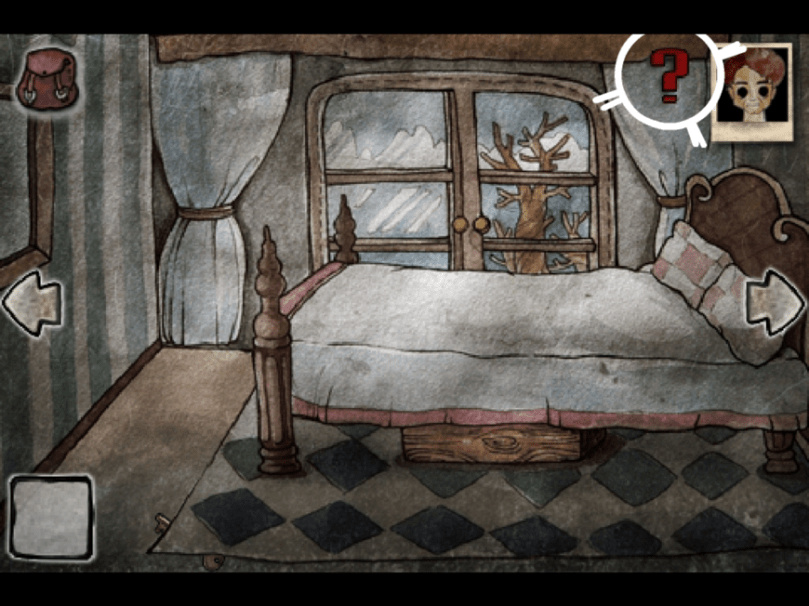
Figure 1: the first game scene of Missed Paradise. Once the game starts, the father and mother will find themselves locked in their own bedroom.
What are Room Escape Games?
Room Escape Games are originally created as a freeware browser game for the Adobe Flash platform but similar game mechanics have been identified in PC and console games. This kind of game is a branch of point-and-click adventure game. Nowadays, there are more and more applications based on Room Escape have emerged. In addition, Real-life Room Escape Games came to the market. These kind of games firmly established a market in Asia and since 2012, the games have spread from there to Europe, Australia and the U.S. Now these games require not only users to point and click, but also users’ all sensual interaction with signifiers, mapping and context given by game designers.
HCI rules- follow or break?
Signifiers in Room Escape Games
A “signifier” is some sort of indicator, some signal in the physical or social world that can be interpreted meaningfully. As for Room Escape Games, “signifiers” are also important. A “signifier” is an indicator or a signal that lead players to the clue. Room Escape Games cannot exist without any signifier. And some signifiers are very obvious and some are not. For example, when you see a locked box in the room, and you can hear something in it when you shake it slightly. Obviously, you need to find a key and use it to unlock the box and there might be some clues in it. Another example could be, when you find a red laser pointer, you may need to find a mirror to reflect the laser to certain spot, where might show you a new clue. Compared to the first signifier-locked box, this red laser is less obvious.
Mapping in Room Escape Games
The term “mapping” comes from proper and natural arrangements for the relations between controls and their movements to the outcome from such action into the world. The real function of natural mappings is to reduce the need for any information from a user’s memory to perform a task, which is another key to designing Room Escape Games. The example of mapping utilization could be, when you find a note book of the room’s host, and there is a sketch seems like the structure diagram of the room. Then you may find some special clue at a spot of the room corresponding to the spot in the sketch. Below, figure 2, 3 and 4 show another common use of mapping. 4 numbers in 4 directions are needed for opening the box. The numbers can be found when I use a special fluorescent lens to see this box. And the numbers are also in 4 directions.
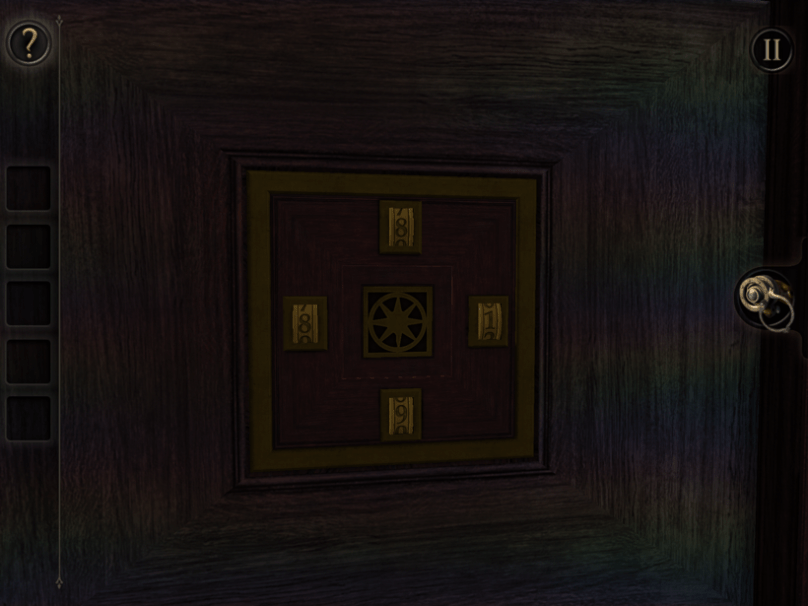
Figure 2: This is a box with a coded lock requires 4 numbers in 4 different directions: up, down, left and right.
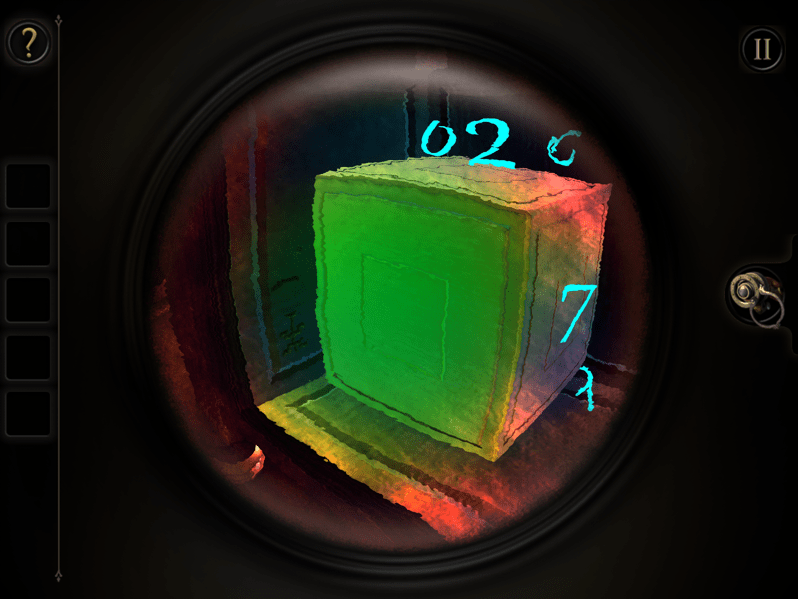
Figure 3: Two numbers can be seen here through a special lens. 2 is the number needed for the code on the top of the locked box, and 7 is the number needed for the right code of the locked box.
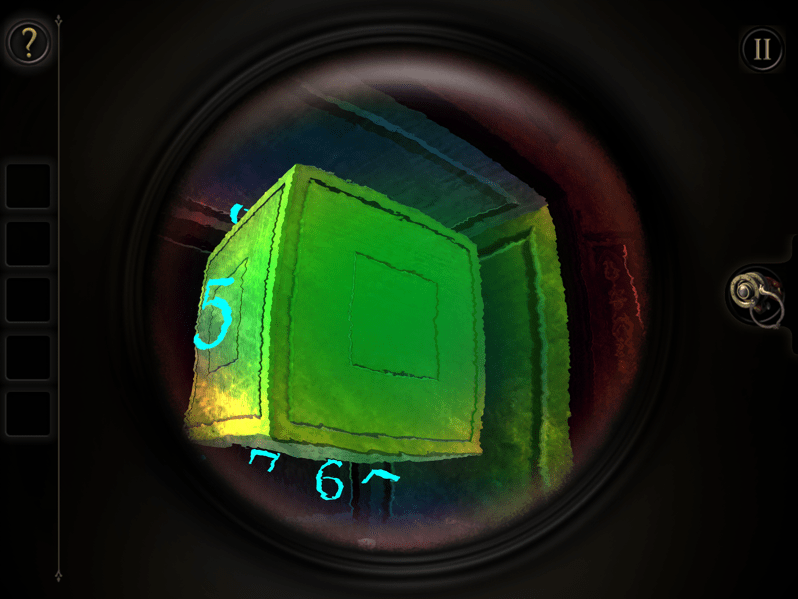
Figure 4: When you look around the box, another two numbers can be seen through the special lens. 5 is the number needed for the left code of the locked box, and 7 is the number needed for the code on the bottom of the locked box.
Design for exploration than design for ease of use
Room Escape Game design has many connections with HCI. However, designers should not use HCI principles to ruin the joy of Room Escape Games. It is important for Room Escape Game designers to keep a good balance when designing signifiers and mapping. Unlike the other product design, room escape games should not always have very clear signifiers. Because one kind of joy of this game comes from exploring and discovering the clues. At the same time, designers also should not offer no signifier at all because users would find it impossible to pass the game. Therefore, the number of signifiers as well as the degree of signifiers’ obviousness can influence the degree of difficulty. And the degree of difficulty directly effects the degree of the game engagement. Too much signifiers or too obvious signifiers might make the game too easy to play and reduce the game’s mystery. Similarly, too little signifier or signifiers which are too hard to find might make the game too difficult to attract users and to keep users be patient.
What are Real-life Room Escape Games?
Real-life Room Escape makes players locked in a real room and interact with real objects. They are unique and interactive live puzzle events where teams solve mysteries and clues within a time limit. The beauty of the game is that you are actually physically inside the story.
Real-life Room Escape Games and HCI
From my first hand experience, I find proper signifiers and mapping setting as well as attractive context are still the essential elements. One of my favorite Real-life Room Escape Game is called Assassination, which is very popular in China. I had a great experience together with three friends. The context is that players start the game in a hotel room (a room decorated just like an usual hotel room). I was told that my identity was a husband, and the biggest task was to find useful clues to save my wife, who was claimed kidnapped by the person who lived in this room. But the room was empty when we got there. Basically, there was a bed and a desk with a computer in the room. At first, we did not know what to do or what we could do. So, let’s just ask, what do you possibly do in a hotel to kill time? The first thing you might do is to read the brochure of the hotel. That’s right! The first clue was in the brochure. We got the phone number of the hotel’s front desk and there was a telephone on a bedside table. So why not try to use the phone to call this number? As a result, we got the first clue from the phone call. This progress we made is because of signifier. And I really appreciate the signifier setting, which is neither too clear nor too elusive.
One interesting example of mapping was when we turned on a monitor in the room, two pictures appeared on the screen of computer showing a same street. After a while, we noticed that it is exactly the same street just as the one outside of our building which we can see through this room’s only window. And we found that actually the words in a same road board are different in the two pictures. Then we naturally used the telescope to see what was exactly written in the real road board through the window and successfully found a password. I was deeply impressed and applauded for this subtle design, which applied mapping to the game very well and really combined the real-life to the game.
This game experience was so great also because its story. At the end of the game, we finally find out that we were cheated. Actually, no one kidnapped the wife and the whole thing was controlled by her. What a big surprise to us.
User experience really matters
Once I visited a Room Escape Game club in Beijing, China. Luckily, my friends and I passed the game successfully. This was a great game, but I also had a special experience. After we opened the first door and entered in the second room, which is an empty coffee shop. From here, we were stuck for more than thirty minutes. Although we need some time to enjoy explorations, we felt not good during this long period of time, since the total time for this game should be 1 hour. To think back, the problem occurred because of my specific experience. There was a horrific doll with a word on it: Do Not Turn Upside-down. One of my friend said that we might need to turn the doll upside-down based on the words. But I said No! I guessed this was just for creating horrible atmosphere to match the theme of this game. And I was afraid of whether it was a trap or a real curse because I was so engaged into this game. So we began searching for other clues in this room, including all the strange letters and lines on the wall. But nothing helped. After about 30 minutes without making any progress, I screwed up and turned the doll upside-down, and the phone started ringing. We answered the phone and the game could finally be continued. I think this is not because the signifier on the doll is too difficult to be found, since we actually noticed it once we entered the room. But the experience really influenced the game process, because the environment is so horrible that the signifier did not work for me at that particular context. I knew we should interact with that doll, but I was just too afraid of doing so. The boss of the game said it was an interesting feedback that he had never thought about before and he would make some changes on it.
Real-life Room Escape Games have made the virtuality towards reality, and the user experience is becoming better because of the all-sensual interaction design. In addition, user experience is also becoming more and more important in Real-life Room Escape Game design, which causes game designers to pay more attention to it during the iteration period.
Conclusion
In sum, good user experience tends to become the foundation of a good Room Escape Game. Designers should more focus on user experience and needs in order to design for exploration instead of ease of use. And for practical aspect, proper signifier and mapping setting and attractive context are important and necessary things for designers to consider. Designers are supposed to carefully calculate and keep a good balance when arranging signifiers and mapping, which is quite different from designing everyday artifacts. Last but not least, creating a good story always works.
References
3K Realms Studio. (2013). Missed Paradise Lite (Version 1.11) [Mobile application software]. Retrieved from http://itunes.apple.com
Luke Graham. (2015, August 24) Escape games and immersive experiences are the latest entertainment trend. Retrieved from http://www.cnbc.com/2015/08/17/escape-games-and-immersive-experiences-are-the-latest-entertainment-trend.html
Signifiers, not affordances, ACM Interactions, volume 15, issue 6.
Retrieved from http://jnd.org/dn.mss/signifiers_not_affordances.html
SCRAP Entertainment Inc. What is Real Escape Game?
Retrieved from http://realescapegame.com/whatisreg/
Fireproof Studios Ltd.(2015) The Room (Version 1.0.4) [Mobile application software]. Retrieved from http://itunes.apple.com
 Yiqing Ling